Tuesday, July 28, 2009

The Ugly Truth


I usually try to avoid critiquing films that are just released, because I think spoiling plot lines is just annoying and petty. The only time I discuss the movie is if I find it so moving that those who would never watch it have to hear about it (that's pretty much my mother), or if I feel some of its attributes can be discussed without revealing the overall plot and timbre of the work.


That's why I haven't discussed my opinion of the most recent Harry Potter film - I really could not comment on it without disclosing something I shouldn't.


That isn't the case with The Ugly Truth. I'm glad to say that the previews haven't totally ruined it. Although the story line is formulaic and Hollywood didn't decide to throw us a curveball with an unhappy ending, I still found bits of the film surprisingly funny. I just love clutsy characters - whether man or woman, I relate to them on some fundamental crash-test-dummy level. Katherine Heigl would, for example, trip and I would, for example, chuckle quietly. And then ten seconds later, as she looks at her body on the floor wondering how it happened, I end up guffawing - because I have TOTALLY been there. So many times. (She doesn't trip in the film -- see this is where discussing a movie that I want to protect becomes a tish bit tricky.)


Oh, and in case you were wondering, Gerard Butler is a very good actor. Yes, he's hot. With like five t's at the end. But I was surprised to find him more than a sex symbol - his character was believable, I found his nonverbals warm and engaging, and I wanted to be his friend by the end of the movie. There were also some surprisingly fresh characterizations done by John Michael Higgins and Cheryl Hines, and a few subplots that managed not to distract.


Overall, I found the movie refreshing, sharp, formulaic, and oh my word so very vulgar. If a grade were being assigned, it would receive a C+ or grudging B-. Yes, I enjoyed it thoroughly. But there is this sort of invisible checklist I carry into every theater, and it did not meet all of those standards.


Go to the film. Without the kids. Laugh your hind ends off, and as you walk out cheekless, remember what I told you. I think my review will make more sense afterwards.

Elizabeth: The Golden Age


Okay, this movie was really very good. I have to say that, even though I don't want to. Period films tend to annoy me, and here's why. I always become obsessed with how accurate the movie is for the era it is depicting. Not that I'm an expert, by any means. Not that I'd ever know. But it bothers me, and I find myself distracted throughout the whole movie.


So what do you say? The story line was interesting? Well, that's history. The acting was superb? Well, duh. The cast was out of this world. It was one of those movies that was so shamelessly perfect that it almost numbed you to its excellence. The one aspect that staid refreshingly noticeable was the use of color in the film. Cold moments were shot in greys and blues, dark deeds were shadowed in such a heavy palette that the viewere almost had to squint to make sure they were seeing what was being shown. The image of Elizabeth standing on England's coast, watching the ships blaze just off shore with the wind whipping her night rail, completely vulnerable and stripped of her station, will stay with me and be at the forefront of my mind whenever The Golden Age is mentioned.


If you aren't into historical films, I think you'd still enjoy it. But don't watch it when you're tired - so much of its value is in the dialogue.

Thursday, July 23, 2009

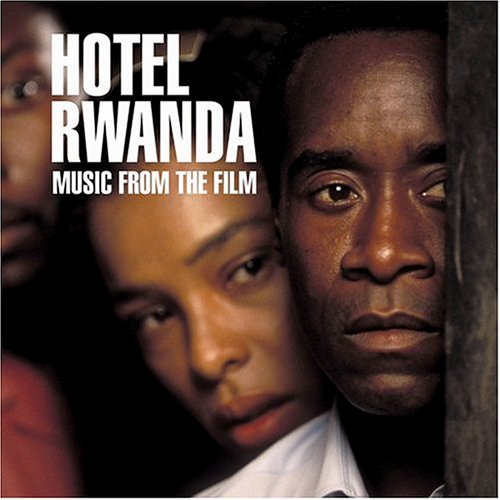
Hotel Rwanda


I know the film is not new to the screen, but something kept me from watching Hotel Rwanda for years. A part of me was tired of political themed movies receiving seemingly automatic acclaim, another recognized that Cheadle is not my favorite actor, and the fact that films with an air of injustice were pumping out of Hollywood like a knicked artery left the rest of me leery. This is not to discredit the raging lunacy that is genocide, the hypocricy that is religious or racial warfar. Rather, it is an attempt to protect it. How ironic, I thought, that Americans could find one more way to rape Africa? We could not be budged from our theaters and sofas in 1994 when Rwanda needed us, but films such as these wash any dredges of guilt away. We feel we have done our duty. We watched the movie. We cried and felt fear. We shook our heads and pondered what we might do if America imploded. And so we have paid our dues. I did not want to feel that way, to give in to the tonic being thrust in my face, and so I pursed my metaphoric lips and held my self righteous breath.


My Achille's heel lies in the fact that my brain does not rest with one conclusion. Ever. A nagging thought came sleucing between my ears, pooling in a toxic puddle at the nape of my neck. What if I really did not care about Africa at all? What if the truth was that I felt no guilt for my ignorance and complacency, and was bored by even the thought of sitting through the film? What if I was a bad person? And what if this was the one movie where Cheadle really did redeem himself.


In the end, I let Netflix make the decision for me. I put the film in the bottom of my very long list of films I'd like to see, and forgot about it. And it came in the mail this week. And I watched it.


So, what did I think? My first thought was that it was formulaic, and then I caught my error and quickly found the ironic humor in that idea. If the film is formulaic, if genocide, systematic back-turning from every major nation, and a mob mentality seemed predictable, then that fact alone made a statement against society all of its own accord. Bravo.


The cast was just alright for me. Cheadle did impress, relatively speaking. I don't think his performance was one of a kind. Give any man with a heart that role, and he will reach out of the screen and grab you. I have no idea if the accent was spot on or not, but it was at least consistent. His wife in the film, Sophie Okonedo, bothers me. I don't dislike her, but she doesn't sit right either. I remembered her performance from Secret Life of Bees immediately upon seeing her (although that film was shot four years after), and I think I might have placed some of the character she played in that film onto the one she played in Rwanda. I found her weak, obedient, afraid, struggling for resilience. I kept thinking that one more tragedy would break her, and I was annoyed with the distraction such a cloying possible sublet presented throughout the film. But maybe that's just me. I of course appreciated the surprise role of Joaquin Phoenix, but it was not perfect. Am I the only one who thought he looked a little high? Nolte needs to retire already. That's all I'll say about him. And the rest were unknown to me, which I think was the point. The only seemlessly authentic performance I found was that of Paul's son in the film - the one they find covered in someone else's blood at the beginning of the dissolution of Rwanda. Every glimpse you got of him throughout the film was riddled in pain, racked in fear, coated in the loss of innocence. It moved me.


From a technical standpoint, I found the film impeccable. The use of light and dark, of modernized peace and third world dirt and disorder, the juxstaposition of life before and after the foreigners were swept away by their embassies, were flawless. And the story needed to be shared. Do I think I was right to be leery - let's just be diplomatic about it and say I'm not entirely sure I wasn't spot on. I think the movie will impact each viewer differently. And though some will be sedated into satisfied complacency, even one more person inspired to affect change gives Hotel Rwanda purpose.